Palm Desert is the first book of photographs in a series by Emigre magazine creator Rudy VanderLans. It is based on the music and lyrics of Los Angeles-based composer Van Dyke Parks and pays tribute to both Parks and Southern California. Somewhere between fact, fantasy and fiction, this book strives to visualize the environment evoked in Parks's 1968 composition "Palm Desert," and hopes to echo his creative approach of blending classical, historical, vernacular and environmental themes. The result is a curious mix of fan's tribute, documentary photography, impressionism, and experimental music review.
The book also includes a bonus music CD containing the original track "Palm Desert" by Van Dyke Parks, as well as three adaptations by Emigre recording artists Itchy Pet, Honey Barbara, and Elliott Peter Earls. Playing time 21 minutes.
96 pages, 5.5 x 8.5 inches, 75 full color and duotone photographs, cloth cover with blind emboss, sewn and case bound, with a CD attached in the back.
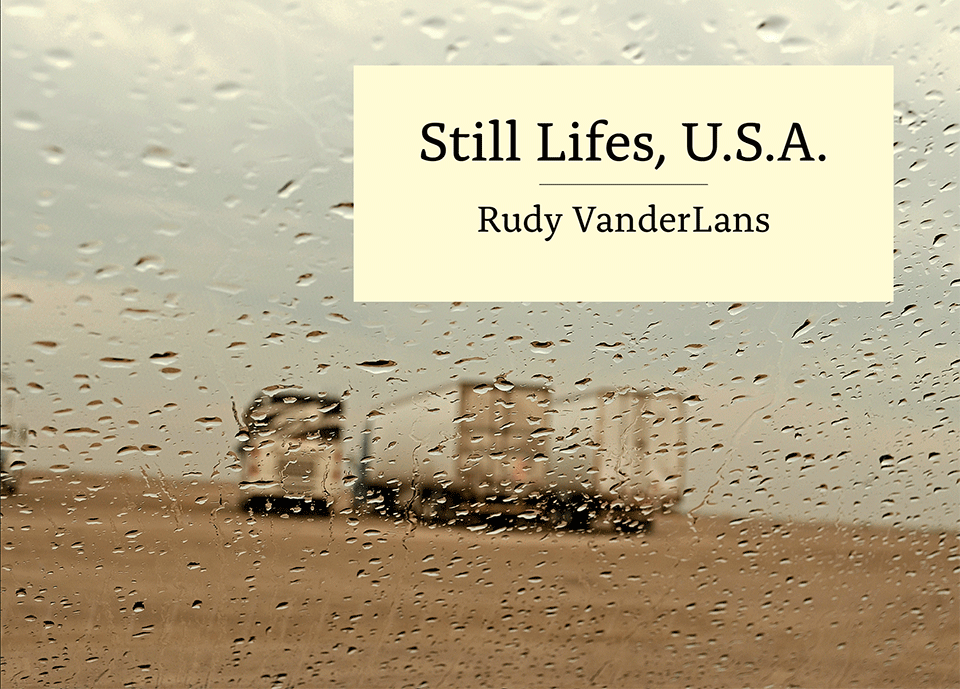
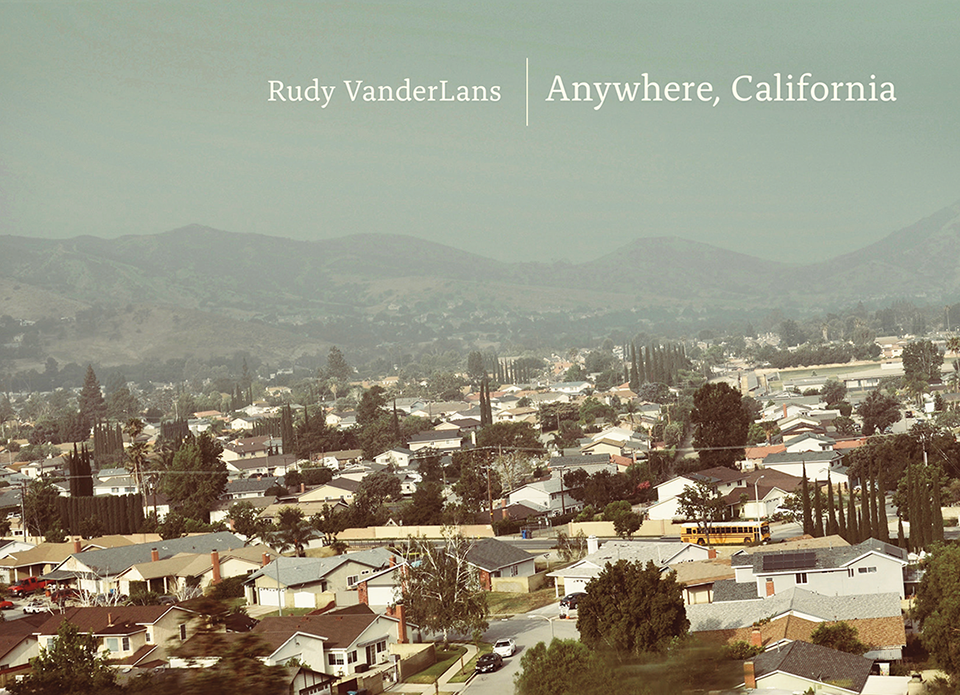
This book is part of a trilogy:
Buy the trilogy (Palm Desert, Cucamonga, and Joshua Tree) for $64.85 and save $10.00!
Buy Supermarket with the trilogy (Palm Desert, Cucamonga, and Joshua Tree) for $80.00 and save $14.85!
Excerpt from Palm
Desert.
The photographs and music [in this book]
are based on “Palm Desert,” a track on the 1968
debut album Song Cycle by Van Dyke Parks, one of my all-time
favorite records, and a mythical release of impressive
proportions.
“Not since Gershwin has someone so
completely involved in the pop holocaust emerged with such a
transcendent concept of what American music really means. Song Cycle is
that album we have all been waiting for: an auspicious debut, a
stunning work of pop art, a vital piece of Americana, and a
damned good record to boot.”
—Richard Goldstein, The New York Times,
1968
I purchased my copy of Song Cycle a few years after
its release, and I still remember the store clerk, a weathered
music fan many times my age, who assured me that it would take
a dozen years until I would fully enjoy this record, and
another dozen to recognize its true significance as a timeless
classic. This comment turned out to be more profound than I
imagined. After its release, Song
Cycle received tremendous
critical acclaim, as it does today, but it sold less then
10,000 copies in its first year of release—an
insignificant number by major label standards. It was one of
the most expensive studio albums of its time, and the execs at
Warner Bros. were desperate. In order to minimize their losses
they ran a series of ads, hotly criticized by Parks, with the
headline: “How we lost $35,509.50 on ‘The Album of
the Year.’ (Dammit)” The text read: “Van
Dyke’s album’s such a milestone, it’s sailing
straight into The Smithsonian Institute completely bypassing
the consumer.” To remedy the situation, and to get some
kind of buzz going, Warner Bros. offered people who had bought
the album two brand new copies in return for their worn copy
and one penny. This is the stuff myths are made of.